
Alain Delon — Capital Does Not Remember
Rome, 1962.
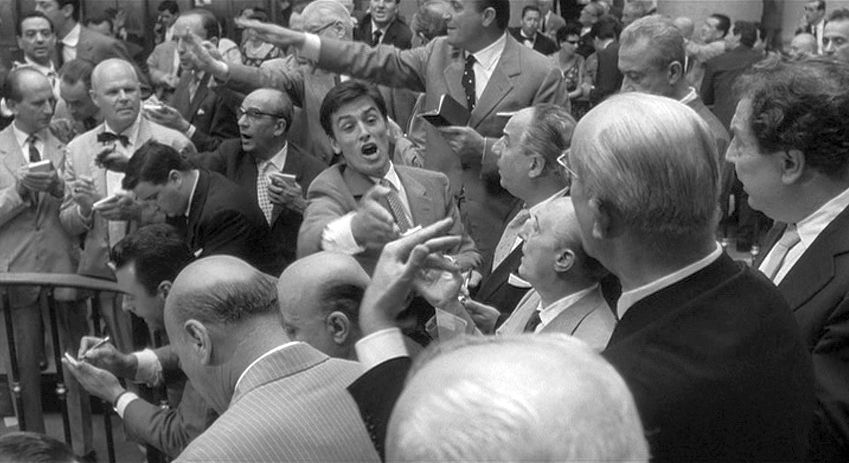
The stock exchange is full.
Bodies press against one another.
Arms rise.
Voices collide.
Michelangelo Antonioni is not filming a setting.
He is filming a system.
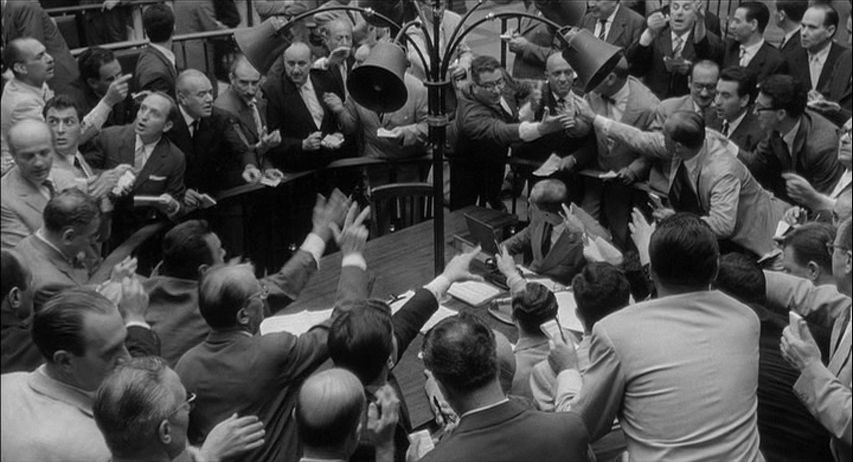
In L’Eclisse, the trading floor becomes a nervous organism.
Value moves faster than glances.
The men seem interchangeable.
The noise is not.
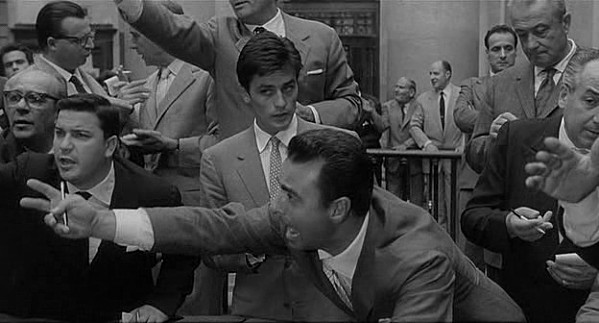
Alain Delon plays a stockbroker.
He does not dominate the scene.
He participates.
He alternates.
At times he shouts.
At times he watches.
His face moves through the turmoil without dissolving into it.
A control that is neither heroic nor moral.
A contained tension.
Then comes an announcement: a man has died.
The room freezes.
A minute.
Arms lower.
Gestures cease.
The telephones are still ringing.
The silence does not become reflection.
It remains technical suspension.
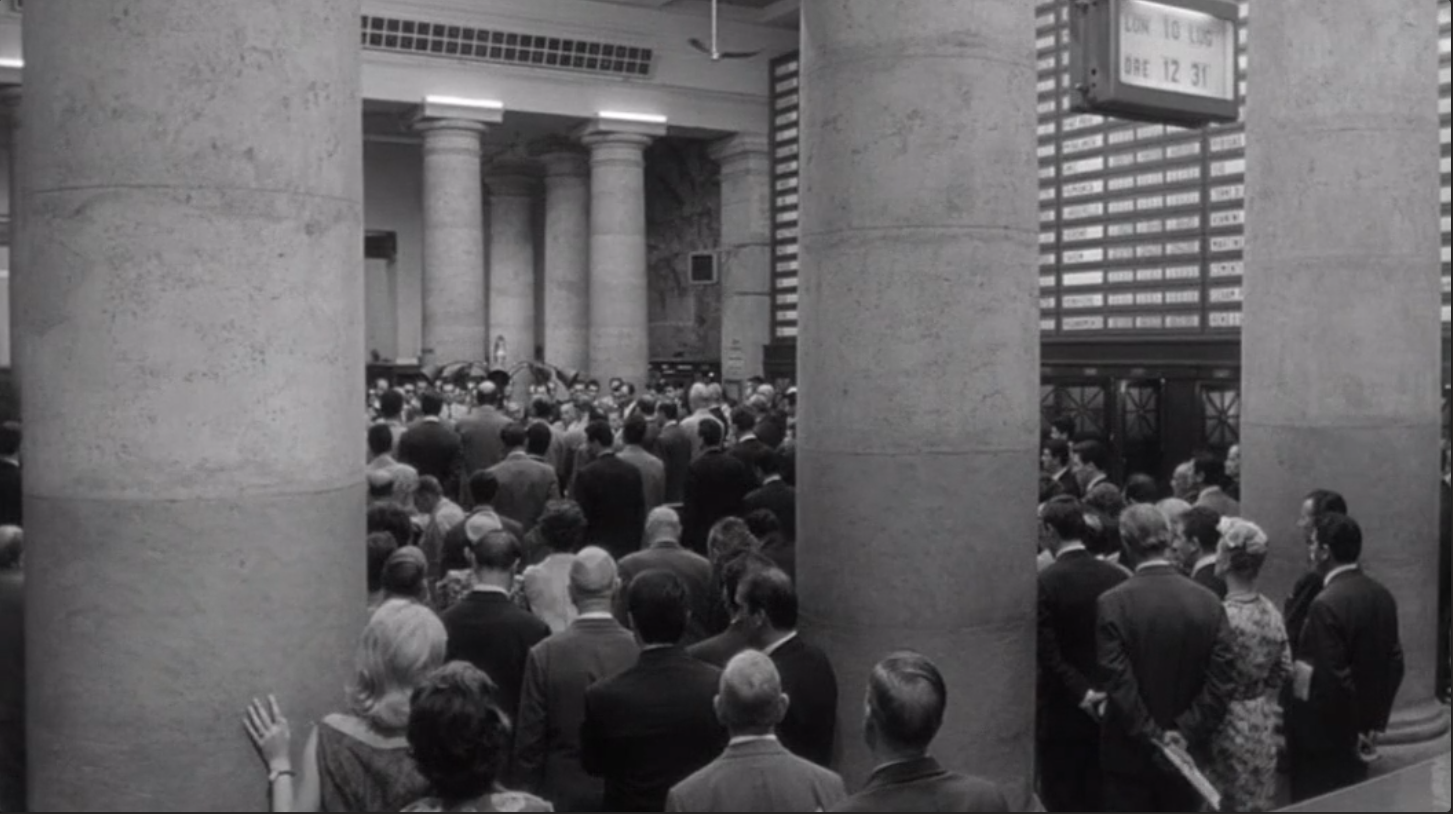
Then movement resumes.
Sharp.
Without transition.
As if the event concerned a body —
not the system.
Here the film becomes merciless.
Capital does not stop.
It does not remember.
It does not grieve.
It circulates.
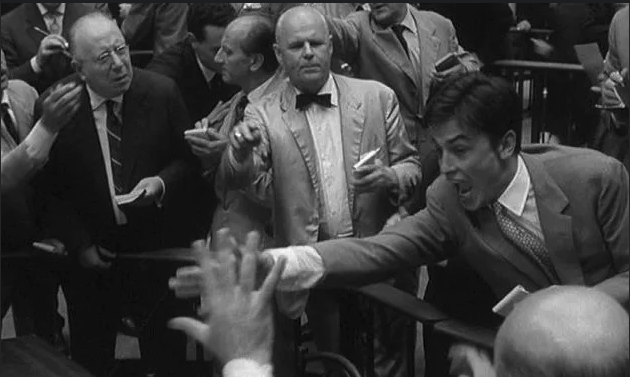
What cinema captured in 1962 with almost clinical lucidity is this: value exists independently of the lives that carry it.
At the center of this mechanism, Delon is no hero.
He is a controlled surface of the system.
The presentable face of an impersonal flow.
And yet.
Off camera, Alain Delon was an exacting art collector.
Not an accumulator.
A selector.
He chose works that endure.
Material presences.
Objects that do not circulate — they remain.
On screen, he participates in speed.
In life, he chose duration.
There is a fracture here.
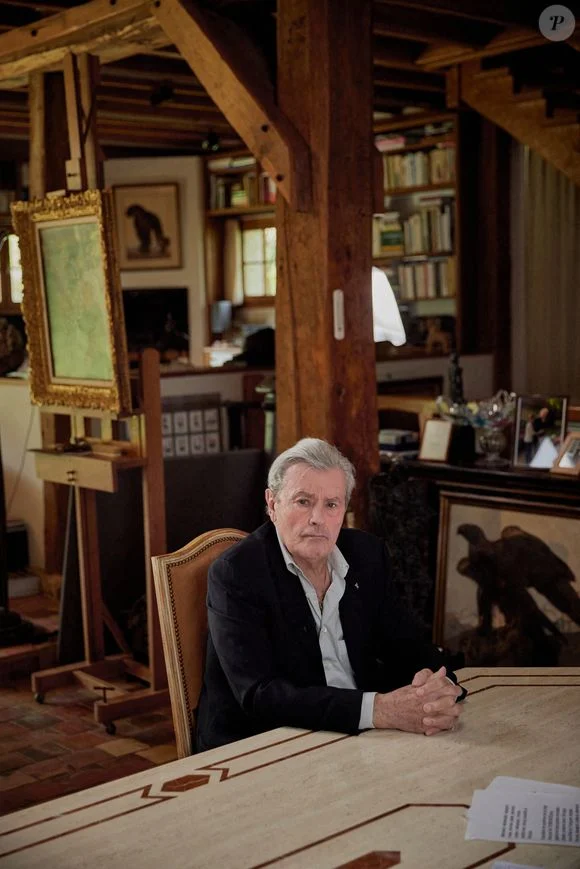
On one side: transaction, urgency, oblivion.
On the other: matter, gaze, memory.
Modern capital has always required staging.
Antonioni revealed it without emphasis.
Art requires no velocity.
In Editorial No. 1, we examined the graphic representation of markets.
Here, it is their human representation — and their limit — that appears.
Markets absorb the instant.
Works resist.
Capital passes.
What remains is never what is exchanged
Risk Warning: Les peintures indiquent toujours les performances passées et non les résultats futurs.