Alain Delon — Capital Does Not Remember

Alain Delon — Capital Does Not Remember

Alain Delon — Capital Does Not Remember

Rome, 1962.

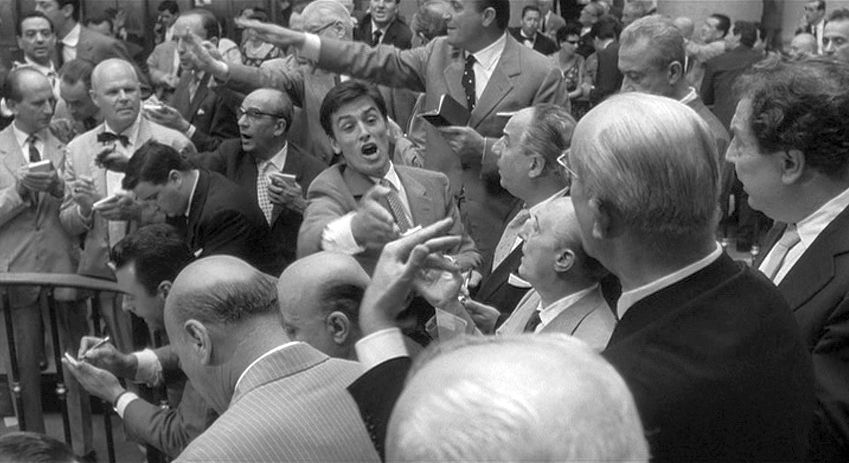
The stock exchange is full.
Bodies press against one another.
Arms rise.
Voices collide.

Michelangelo Antonioni is not filming a setting.
He is filming a system.
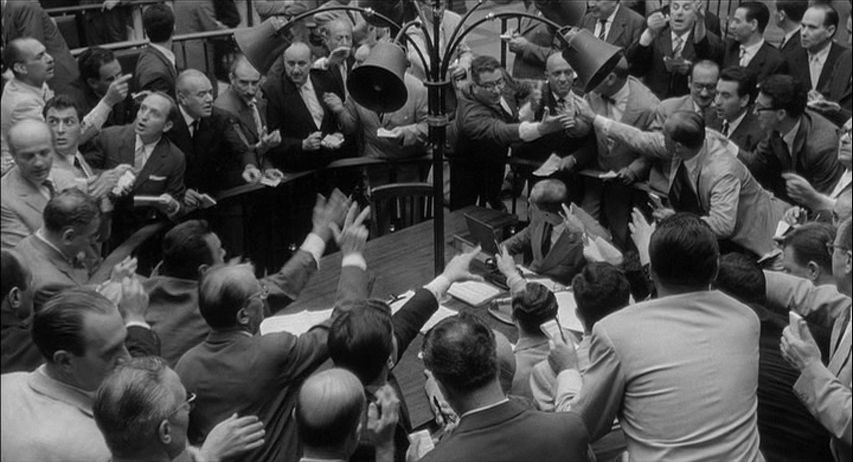
In L’Eclisse, the trading floor becomes a nervous organism.
Value moves faster than glances.
The men seem interchangeable.
The noise is not.

Alain Delon plays a stockbroker.

He does not dominate the scene.
He participates.
He alternates.
At times he shouts.
At times he watches.

His face moves through the turmoil without dissolving into it.
A control that is neither heroic nor moral.
A contained tension.
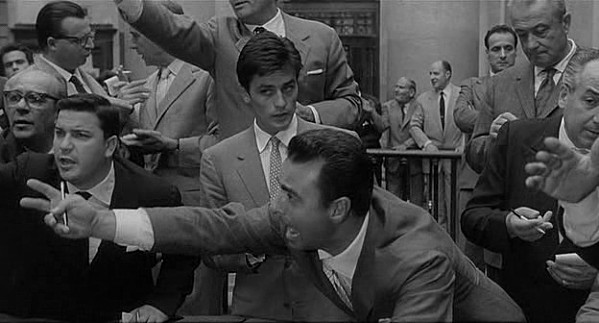
Then comes an announcement: a man has died.

The room freezes.
A minute.

Arms lower.
Gestures cease.

The telephones are still ringing.

The silence does not become reflection.
It remains technical suspension.
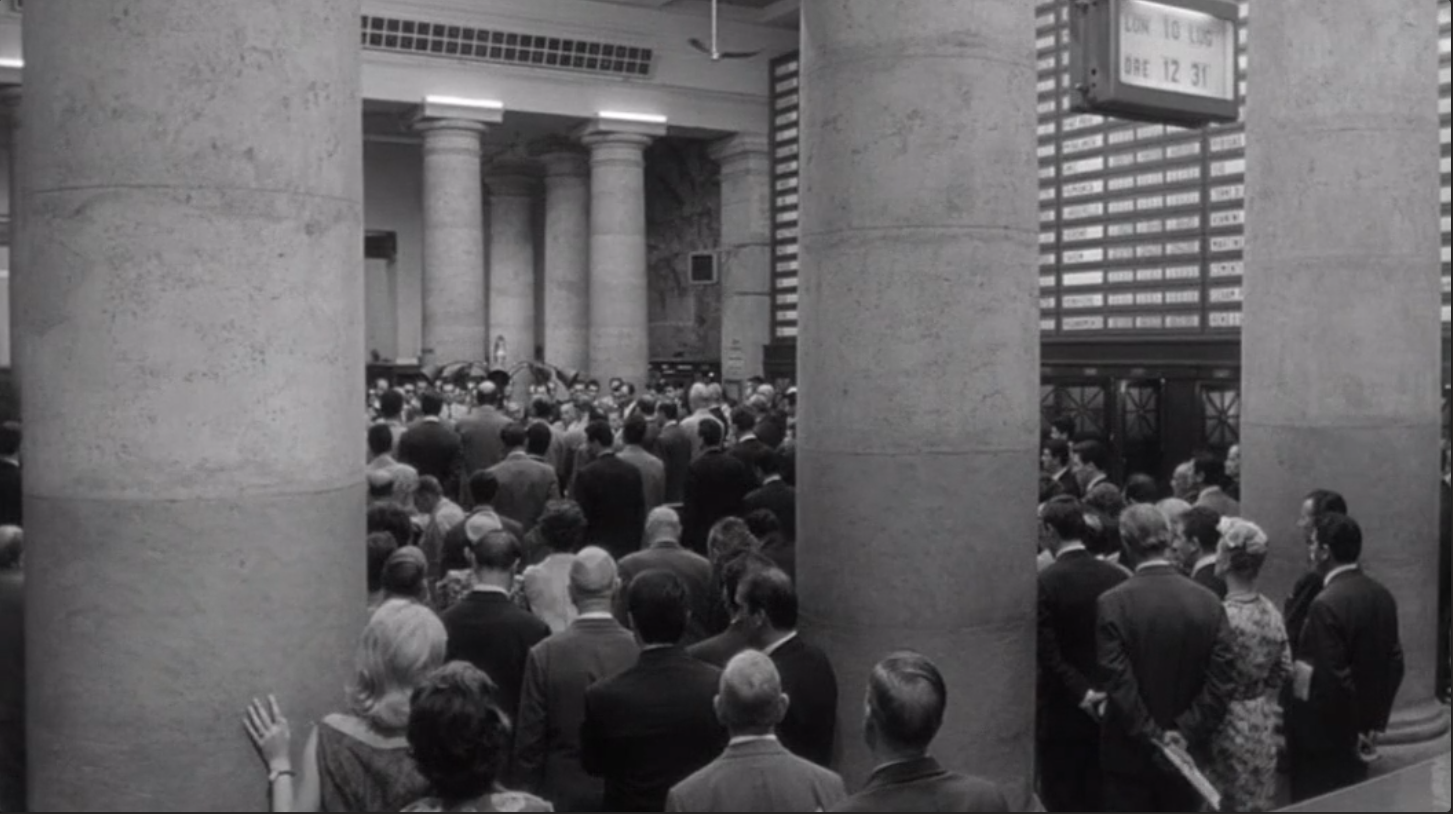
Then movement resumes.
Sharp.
Without transition.

As if the event concerned a body —
not the system.

Here the film becomes merciless.

Capital does not stop.
It does not remember.
It does not grieve.

It circulates.
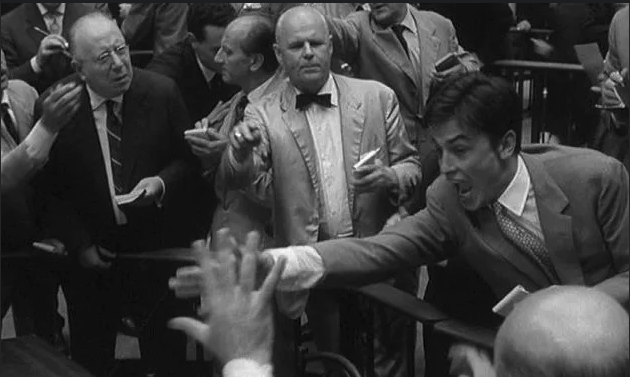
What cinema captured in 1962 with almost clinical lucidity is this: value exists independently of the lives that carry it.

At the center of this mechanism, Delon is no hero.
He is a controlled surface of the system.
The presentable face of an impersonal flow.

And yet.

Off camera, Alain Delon was an exacting art collector.
Not an accumulator.
A selector.

He chose works that endure.
Material presences.
Objects that do not circulate — they remain.

On screen, he participates in speed.
In life, he chose duration.

There is a fracture here.
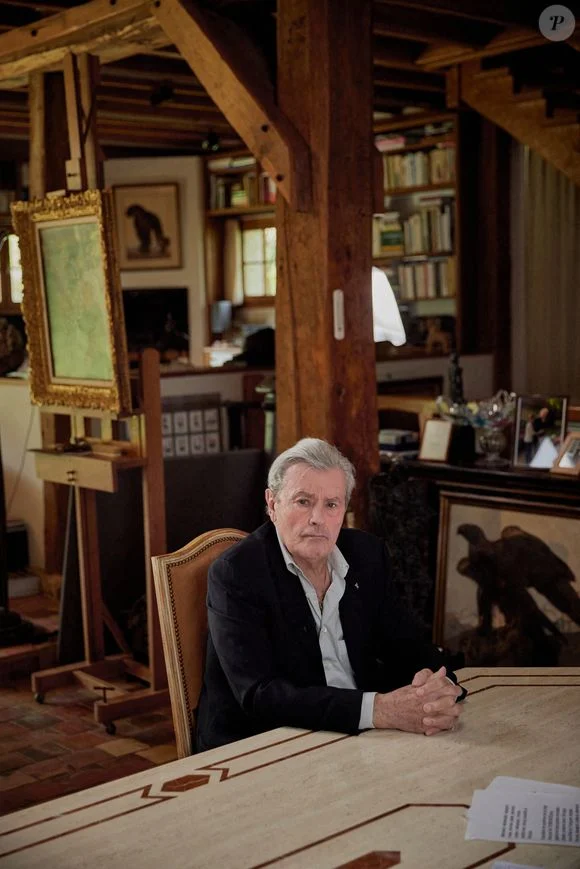
On one side: transaction, urgency, oblivion.
On the other: matter, gaze, memory.

Modern capital has always required staging.
Antonioni revealed it without emphasis.
Art requires no velocity.

In Editorial No. 1, we examined the graphic representation of markets.
Here, it is their human representation — and their limit — that appears.

Markets absorb the instant.
Works resist.

Capital passes.
What remains is never what is exchanged


Risk Warning: Les peintures indiquent toujours les performances passées et non les résultats futurs.

David Lefebvre – Quand l’indice devient paysage

David Lefebvre – Quand l’indice devient paysage

Markets rarely leave traces.
Some artists choose to give them a landscape.

David Lefebvre n’a jamais cherché à illustrer l’économie.
Il n’a pas tenté de la rendre plus lisible, ni plus séduisante.
Il a fait autre chose, de plus rare : il l’a déplacée.

Le CAC 40 est un chiffre.
Une abstraction pure.
Un flux sans matière, sans mémoire, sans surface.
Il s’écrit, se calcule, s’efface.
Il ne laisse, en principe, aucune trace.

Et pourtant.


I. Le silence des chiffres

Un indice boursier n’a pas de visage.
Il ne raconte rien.
Il ne montre rien.

Il est composé de mouvements, de variations, de tensions brèves.
Il appartient au temps court, au présent immédiat, à la décision rapide.
Il existe pour disparaître aussitôt.

C’est précisément à cet endroit là où il n’y a rien à voir  que le travail de David Lefebvre commence.

Non pas pour expliquer.
Mais pour retenir.


II. La ligne de crête

Dans la série CAC 40, la courbe cesse d’être un simple tracé mathématique.
Elle devient ligne de crête.

Heure après heure, jour après jour, la variation de l’indice se transforme en relief.
La volatilité devient pente.
L’instabilité devient altitude.

Ce qui relevait du temps se déploie dans l’espace.
Ce qui appartenait à l’écran glisse vers la toile.

La montagne n’est pas peinte comme une montagne.
Elle est peinte à partir d’un indice.

Le paysage n’est pas un décor.
Il est la mémoire lente d’un mouvement rapide.


III. La matière contre le flux

Là où l’indice est instantané, la peinture impose sa durée.

Huile sur toile.
Grille préparatoire.
Coulures acceptées.
Accidents conservés.

Rien n’est lisse.
Rien n’est optimisé.

La matière résiste.
Elle ralentit.
Elle oblige le regard à rester.

À l’opposé de la finance algorithmique, la peinture réintroduit le poids, la friction, l’attente.
Elle transforme un flux abstrait en surface tangible.

Le marché passe.
La toile demeure.


IV. Ce qui reste quand le marché s’est tu

Quand la séance est terminée, l’indice disparaît.
Il laisse place à un autre chiffre, à une autre courbe, à un autre jour.

Le tableau, lui, reste.

Il ne commente pas l’actualité.
Il n’illustre pas une performance.
Il ne cherche pas à convaincre.

Il témoigne.

Non pas de la réussite ou de l’échec,
mais de cette chose plus profonde et plus durable :
le besoin humain de donner une forme à ce qui gouverne silencieusement nos vies.


Certaines œuvres documentent une époque.
D’autres lui survivent.

Dans CAC 40, David Lefebvre ne peint pas l’économie.
Il en révèle le paysage intérieur.


Et ce paysage, une fois vu, ne disparaît plus.

Risk Warning: Les peintures indiquent toujours les performances passées et non les résultats futurs.
David Lefebvre – Quand l’indice devient paysage

David Lefebvre – When an index becomes landscape

Markets rarely leave traces.
Some artists choose to give them a landscape.

David Lefebvre has never tried to illustrate the economy.
He has not attempted to make it clearer, nor more seductive.
He chose something rarer: he displaced it.

The CAC 40 is a number.
A pure abstraction.
A flow without matter, without memory, without surface.
It is written, calculated, erased.
In principle, it leaves no trace.

And yet.


I. The silence of numbers

A stock index has no face.
It tells no story.
It shows nothing.

It is made of movements, variations, brief tensions.
It belongs to short time, to immediacy, to decision.
It exists only to vanish.

It is precisely there where there is nothing to see that David Lefebvre’s work begins.

Not to explain.
But to retain.


II. The ridgeline

In the CAC 40 series, the curve ceases to be a mathematical trace.
It becomes a ridgeline.

Hour after hour, day after day, market variation turns into relief.
Volatility becomes slope.
Instability becomes altitude.

What once belonged to time unfolds into space.
What lived on screens slides onto canvas.

The mountain is not painted as a mountain.
It is painted from an index.

The landscape is not a setting.
It is the slow memory of a rapid movement.


III. Matter against flow

Where the index is instantaneous, painting imposes duration.

Oil on canvas.
Preparatory grids.
Accepted drips.
Preserved accidents.

Nothing is smooth.
Nothing is optimized.

Matter resists.
It slows the eye.
It forces presence.

Against algorithmic finance, painting reintroduces weight, friction, waiting.
It turns abstraction into surface.

The market passes.
The canvas remains.


IV. What remains when the market falls silent

When the trading session ends, the index disappears.
It gives way to another number, another curve, another day.

The painting remains.

It does not comment on current events.
It does not illustrate performance.
It does not seek to convince.

It testifies.

Not to success or failure,
but to something deeper and more durable:
the human need to give form to what silently governs our lives.

Some works document an era.
Others outlive it.

In CAC 40, David Lefebvre does not paint the economy.
He reveals its inner landscape.

And once seen, that landscape does not disappear.

Risk Warning: The paintings always inicate past performance and not a future outcome.

David Lefebvre, CAC 40 Series

David Lefebvre, CAC 40 Series

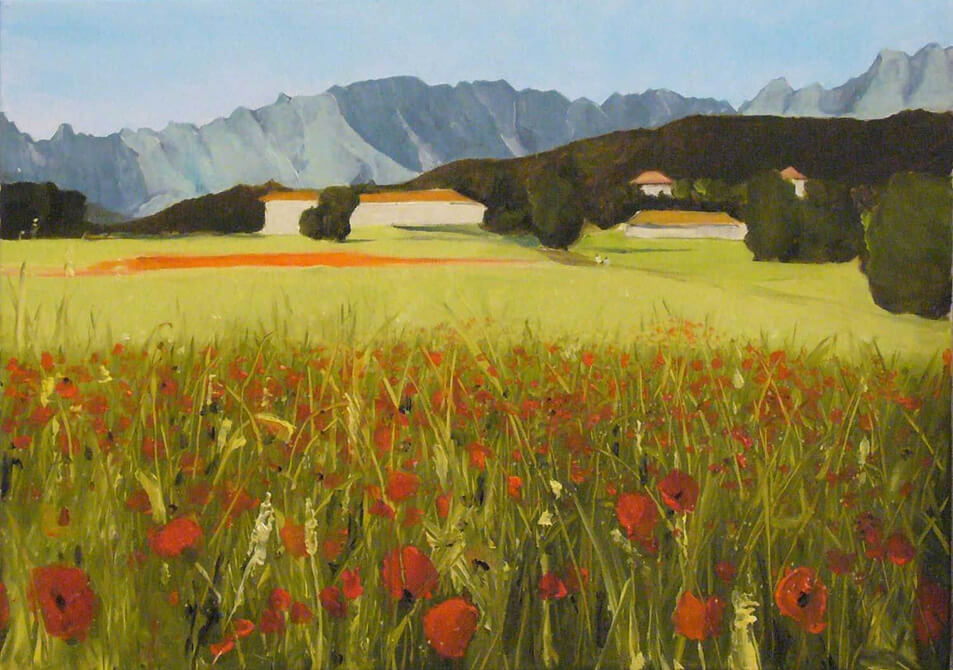
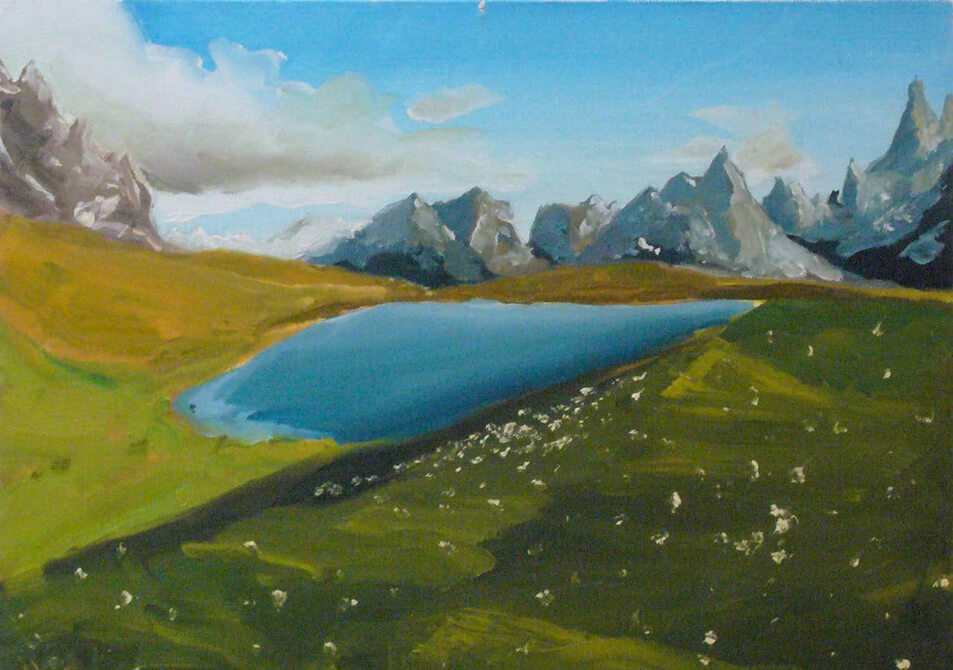
In this painting, Lefebvre represents the CAC 40 for the year 2007. He uses artistic techniques to illustrate the annual movements of the index, offering an overview of this financial period.

This annual representation allows us to see long-term trends and the forces influencing markets over an extended period. The work underscores the importance of historical perspective in financial analysis.

Unknown rating (private collection)
David Lefebvre, CAC 40 Series

David Lefebvre, CAC 40 Series

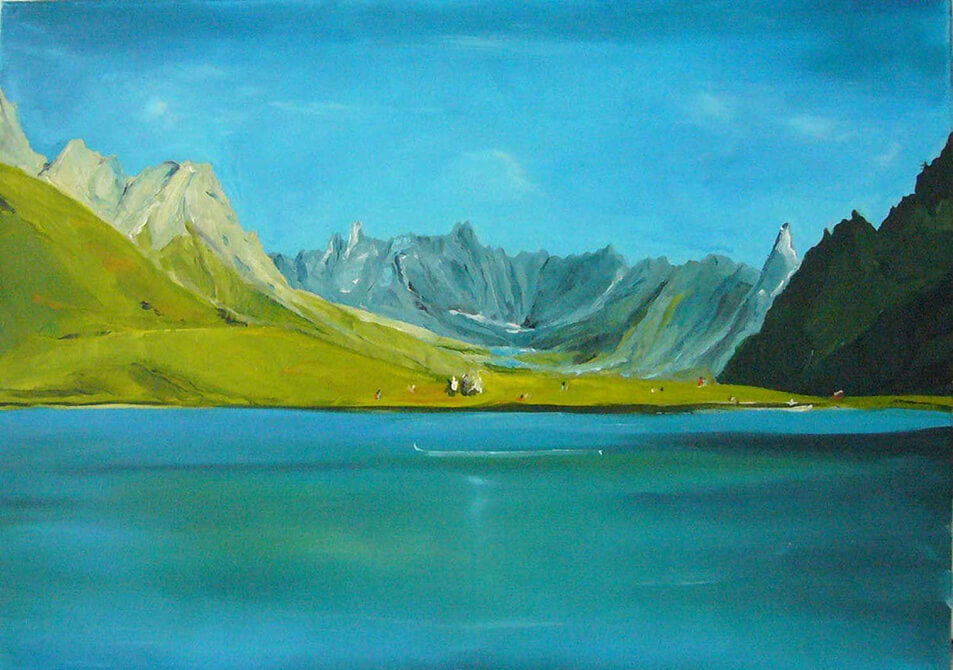
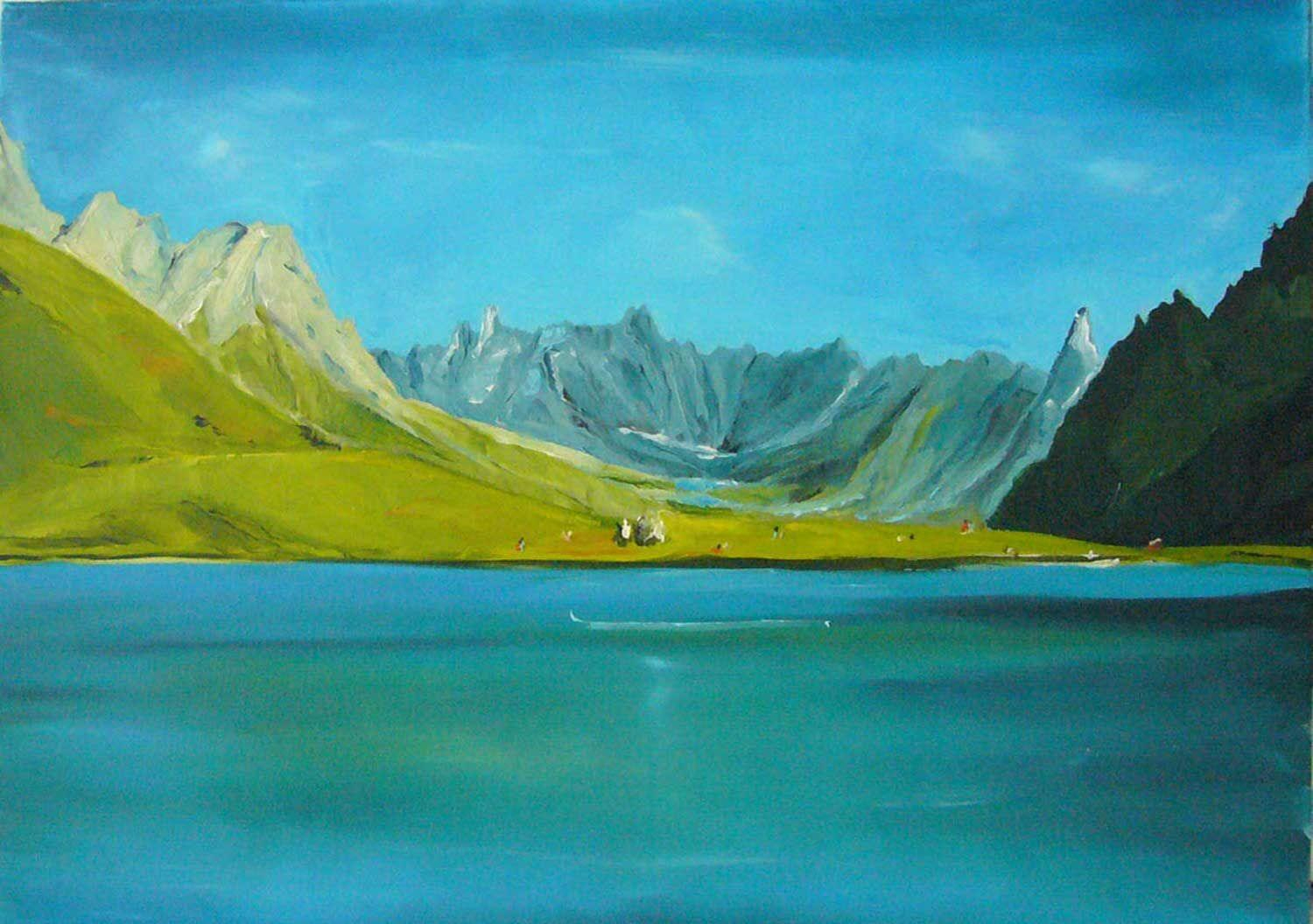
This painting illustrates the CAC 40 as it was on April 11, 2005. Lefebvre’s artistic choices bring the numbers to life, highlighting the fluctuations and trends of the market on that specific date.

This work invites us to reflect on the invisible forces that shape markets. It demonstrates that behind every number, there are human stories and emotions.

Unknown rating (private collection)