The Perfect Placement — Wall Street, Gordon Gekko, and the Art of Positioning

by

There was a moment in the recent history of finance when walls still mattered.

Not only for what they held.
For what they allowed to appear.

In Wall Street, Gordon Gekko is not surrounded only by screens, telephones and numbers. He moves through an environment where art is already present. Silent. Precise. Perfectly placed.

The film has often been remembered for its suits, its screens, its lines and its financial mythology. Less attention has been paid to what it places on the walls.

A Miró occupies the room without needing to be explained.
A Picasso installs an immediate form of prestige.
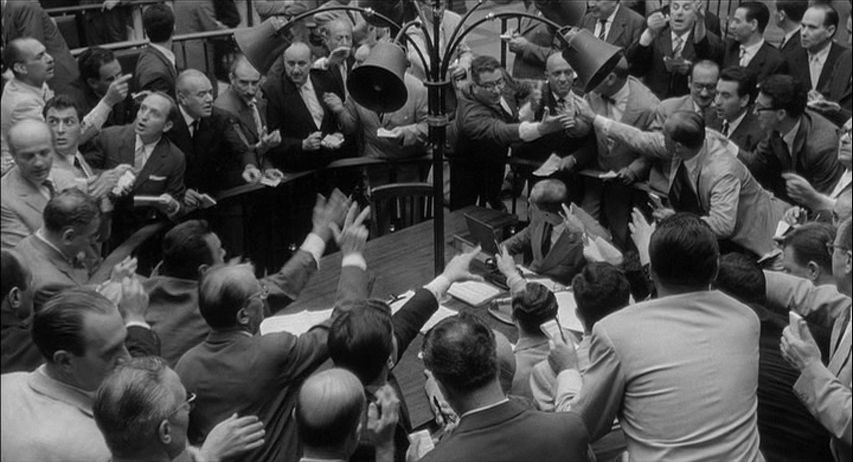
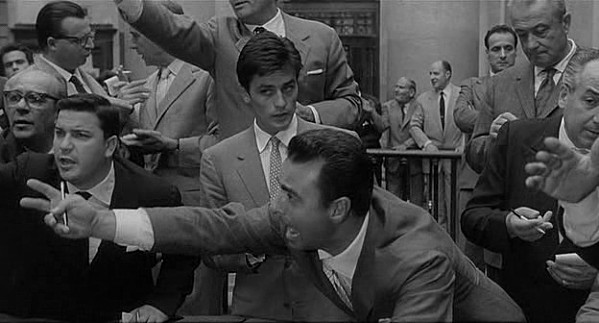
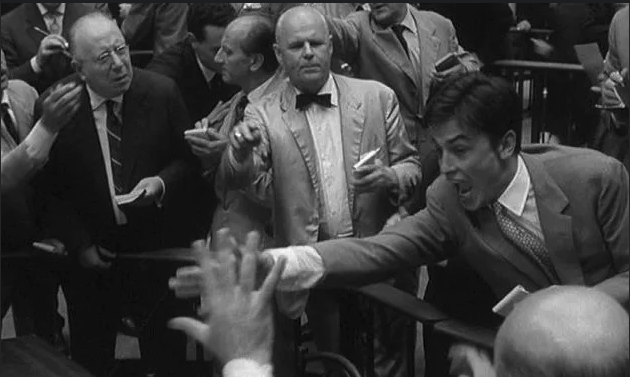
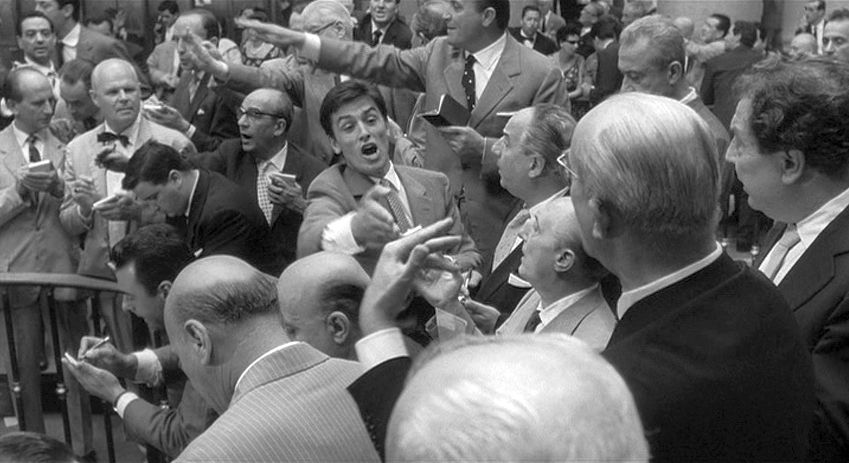
Rosenquist turns the auction room into a theatre of price.
Samaras makes collectors appear almost spectral.
Dubuffet fragments bodies, sites and mental territories.
Sultan reduces form to a black, almost absolute presence.
Birmelin gives money a physical, almost moral density.

Nothing is truly discussed.
Nothing is looked at for long.
And yet, everything is working.

This may be what makes the film so precise. Art is not treated as decoration. It is not there to soften finance. It is not there to humanize it. It gives it an additional density.

In these rooms, the works do not express a passion.
They signal a position.

They say what does not need to be said: access, taste, distance, control. They operate like the other signs of the period : the suits, the glass tables, the phones, the screens, the view over the city. Together, they compose a grammar of power.

But art is a less obedient sign than the others.

A work can be owned without being understood.
It can be perfectly placed without being truly encountered.
It can belong to a room without ever belonging to the person who inhabits it.

This is where Wall Street becomes more interesting than a simple portrait of success. Gordon Gekko does not seem to collect art for what it opens. He collects it for what it confirms.

He does not seek contradiction.
He seeks coherence.

And that coherence is almost perfect.

Everything is aligned. The materials, the movements, the conversations, the gazes. Orders are placed. Positions are adjusted. Arbitrage happens quietly. Value circulates at a speed that the works themselves seem to resist.


They remain.

Not against the system.
Inside it.

Since then, the décor has changed. Walls have lost part of their authority. Screens have gained surface. Flows have gained density. Cycles have compressed. Offices have become more mobile, more transparent, more optimized.

Part of finance no longer seeks only to possess.
It structures.
It allocates.
It moves.
It recomposes.

Art has followed that movement.

It is no longer limited to what can be hung. It can enter a portfolio, circulate through vehicles, appear in physical or digital environments, and be understood as an asset, a presence, a signal, or a form of memory.

This shift does not diminish art.
It changes the question.

Perhaps the real distinction is no longer between those who own works and those who do not. It lies between those for whom art confirms a position, and those for whom it still changes the way they see.

In Wall Street, art is perfectly placed.
That is its strength.
And perhaps its limit.

It accompanies power with cold elegance. It gives it visual depth. It builds around Gekko an image that numbers alone could never have produced.

But some works do more than accompany.
They resist quietly.
Not through opposition.
Through presence.

A position is not measured only by its return.
Some positions can be read in the space they organize.

This may be what remains beyond the film, beyond the myth, beyond the period.

Finance has learned to accelerate.
Art has learned to circulate.
But a true work still retains a rare ability: to slow down the space around it.

Not to contradict it.
To reveal it.

Art has not left finance.
It has simply changed place.
And sometimes, when it is perfectly placed, it shows more than what it decorates.


An unidentified black-and-white urban work, strongly linked to Robert Birmelin’s visual language, brings the city back into the financial interior.

Orders are placed. Positions are adjusted. Arbitrage happens quietly. Value circulates at a speed that the works themselves seem to resist.

Rosenquist turns the auction room into a theatre of price.


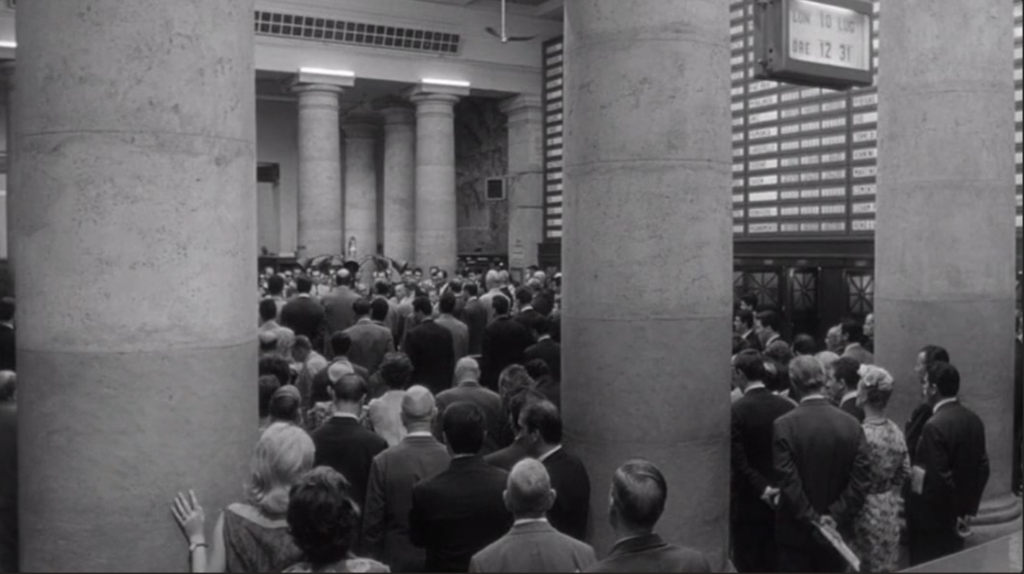
The auction scene transforms art into a theatre of price, status and public positioning.

Curatorial Note

On the artworks and artists associated with Wall Street

This editorial is based on research conducted through the film credits of Oliver Stone’s Wall Street, screen captures, film databases, auction catalogues, artist websites, foundations, galleries and specialized sources on art in cinema.

The purpose was not to produce a decorative list of visible works, but to understand how artists, lending galleries, identified works and more uncertain presences contribute to the visual construction of financial power in the film.

Several works have been identified or strongly documented, including Pablo Picasso, Le Matador 1; Joan Miró, Paysage; James Rosenquist, Samba School; Lucas Samaras, The Collectors; Donald Sultan, Black Lemon / the Black Lemons series; Robert Birmelin, The Twenty Dollar Bill; and works by Jean Dubuffet connected to the Psycho-sites corpus. A sculptural work by Keith Haring appears very likely to belong to the 1987 mask series, particularly around Untitled (Burning Skull), although this identification should remain cautiously phrased.

Other presences remain at different levels of certainty: Julian Schnabel, Jim Dine, Carlo Maria Mariani, R. M. Fischer, Lynn Isaacson, Louise Nevelson, George Condo, Mimmo Paladino, John Alexander, David Klass and Albert / Al Mozell. In some cases, the artist is confirmed by the film credits; in others, the exact title or precise screen location remains to be established.

This distinction between identified works, strong probable attributions, credited artists and cautious references is deliberate. It reflects the very nature of Wall Street’s visual environment: a space where art circulates between private collection, gallery, market, cinema and symbolic power.

To our knowledge, this research offers one of the most detailed public cross-readings to date of the visible works, film credits, lending galleries and market archives associated with Wall Street.

Working Inventory

Artworks and Artists in Wall Street

Identified or Strongly Documented Works


Pablo Picasso — Le Matador 1

Visible in Gordon Gekko’s office.

An important work for the construction of prestige, force, ritualized violence, and symbolic domination.

Joan Miró — Paysage, 1974

Associated with Gekko’s office.
The work contributes to the cultural authority of the space: modernist legitimacy, silent prestige, and visual credibility.

James Rosenquist — Samba School, 1986

Visible in the auction scene.
The work plays a central role in staging price, speculation, and the social theatre of the art market.

Lucas Samaras — The Collectors, 1985

A five-part work.
Its presence is especially significant: it creates a mise en abyme of the collector inside the collector’s own environment.

Donald Sultan — Black Lemon / Black Lemons series

Strongly connected to the interior scenes.
The work condenses form, surface, and decorative authority into a cold, immediately legible visual language.

Robert Birmelin — The Twenty Dollar Bill, 1985

Confirmed in the film.
Its subject is directly linked to money, value, manipulation, and the moral materiality of the banknote.

Robert Birmelin — black-and-white urban work, title unidentified

A drawing, print, or work on paper probably visible in a corporate office environment.
The attribution is very probable, although the exact title has not been identified.

Jean Dubuffet — Site avec 8 personnages, 1981

Identified within the Psycho-sites family.
The work contributes to the mental, fragmented, and almost cartographic construction of Gekko’s world.

Jean Dubuffet — second Psycho-site / Site avec personnages

A second Dubuffet work appears to belong to the same visual family.
The exact title should be phrased according to the degree of certainty retained in the final inventory.

_______________________________________________________________________

Strongly Probable Works or Artists, but Title Unconfirmed


Keith Haring — probably Untitled (Burning Skull) / 1987 mask series

Previously identified online in a rather imprecise way as a “wooden mask”. The strongest research path points instead toward an enamelled aluminum sculpture from Haring’s 1987 mask series.

Julian Schnabel — plate painting / unidentified figurative work

A strongly probable presence through the film credits and the Collection of Julian Schnabel. The exact title or titles remain unconfirmed. The Vita hypothesis should be rejected or left out of the inventory, due to the lack of a solid visual match.

Jim Dine — work with skulls / heads / heart, title unconfirmed

Jim Dine is credited through The Pace Gallery. Christie’s Study for This Sovereign Life is close in motif, but it does not correspond exactly to the work visible in the film.

Carlo Maria Mariani — untitled work, probably related to Sollemnis Caerimonia / Sperone Westwater

The large pale face visible in the film strongly corresponds to Mariani’s postmodern neoclassical language. The attribution is very probable, but the exact title remains unidentified.

R. M. Fischer — lamps / sculptural objects / light works

R. M. Fischer is credited through Baskerville + Watson. The lamps and desk objects in Gekko’s office are strong candidates, but their exact titles remain to be confirmed.

Lynn Isaacson — painting present in the film, unidentified

Her presence is documented by biographical references indicating that one of her paintings appears in Wall Street. The exact work remains unlocated.

Credited Artists

Works Not Located with Certainty

Louise Nevelson

Credited via The Pace Gallery and mentioned among the artists present in Gekko’s office.
The work has not been located with certainty. It is likely to be a relief, assemblage, or monochrome sculptural work, but no title has been confirmed.

George Condo

Credited through the Collection of Julian Schnabel.
The work has not been visually isolated. The mention of an abstraction briefly appearing on screen should be treated as an indication, not as a confirmed identification.

Mimmo Paladino

Credited via Sperone Westwater.
The work has not been located. Future research should focus on archaic forms, masks, signs, figures, or visual elements related to the Italian Transavanguardia.

John Alexander

Credited artist, but no specific work has been confidently associated with an on-screen image in the current state of the research.

David Klass

Credited via Sherry French, Inc., alongside Robert Birmelin.
The work remains unidentified.

Albert / Al Mozell

Credited in the film.
His exact contribution remains to be determined: photograph, drawing, painting, photo-structure, or another visual element. This attribution should be treated cautiously.

Lynn Isaacson

A painting by Isaacson is documented as appearing in Wall Street, but the exact work has not been identified.
Although her current publicly visible practice is largely associated with ceramics, biographical references confirm an earlier painting and sculpture practice.


Unconfirmed Attribution or Possible Inspiration

John Chamberlain / “Chamberlain-like” sculptures

Certain metallic sculptures or assemblages visible in Gekko-related interiors may evoke John Chamberlain. However, his name does not clearly appear in the core credits studied.


This should therefore be phrased as “Chamberlain-like”, “possibly inspired by John Chamberlain”, or “visually comparable to Chamberlain’s compressed-metal language”, rather than as a confirmed work by the artist.

A detailed research appendix listing the identified works, probable attributions and credited artists is available below.

English Research Notes Intro

Artworks and Artists in Wall Street (1987)


This research appendix documents the artworks, artists, galleries and sources used for Capital Artistic’s Editorial No. 3, The Perfect Placement. It deliberately distinguishes between identified works, strong probable attributions, credited artists whose works have not been precisely located, and unconfirmed visual references.

_______________________________________________________________________

1. Identified / strongly documented works

Pablo Picasso — Le Matador 1

Status: identified / strongly documented
Context in the film: visible in Gordon Gekko’s office.
Editorial role: prestige, violence ritualisée, domination, figure du pouvoir masculin et spéculatif.

Sources:
Pablo Ruiz Picasso — Le Matador 1
Gallerix — Picasso 1962–1973
PabloPicasso.org
Musée Picasso Paris
Museu Picasso Barcelona


Joan Miró — Paysage, 1974

Status: identified / strongly documented
Context in the film: associated with Gekko’s office.
Editorial role: modernist legitimacy, cultural authority, silent prestige.

Sources:
Christie’s — Joan Miró, Paysage
Joan-Miro.net
Fundació Joan Miró Barcelona
Miró Mallorca Foundation


James Rosenquist — Samba School, 1986

Status: identified
Context in the film: auction scene; Gordon Gekko bids on a Rosenquist.
Editorial role: the art auction as theatre of price; painting as spectacle, transaction and status event.

Sources:
James Rosenquist Studio
James Rosenquist Studio — Samba School
Sotheby’s — Samba School, Contemporary Art Day Sale, 2014


Lucas Samaras — The Collectors, 1985

Status: identified
Context in the film: visible in the Bridgehampton / Gekko environment.
Editorial role: mise en abyme du collectionneur ; the collectors appear inside the collector’s own world.

Sources:
Sotheby’s — Lucas Samaras, The Collectors
MutualArt — The Collectors
Artnet — Lucas Samaras, The Collectors


Donald Sultan — Black Lemon / Black Lemons series

Status: identified by series / strongly documented
Context in the film: interior scenes.
Editorial role: reduction of form, corporate abstraction, visual authority through black mass and surface.

Sources:
Christie’s — Donald Sultan
Artsy — Donald Sultan, Black Lemon
MoMA — Donald Sultan’s Black Lemons exhibition
Donald Sultan Studio


Robert Birmelin — The Twenty Dollar Bill, 1985

Status: identified
Context in the film: visible in Wall Street.
Editorial role: money as image, money as moral substance, the bill as object of burning / handling / value tension.

Sources:
Robert Birmelin — The Twenty Dollar Bill
Robert Birmelin — Prints
Robert Birmelin official site


Robert Birmelin — black-and-white urban work, title unidentified

Status: strongly probable, title unidentified
Context in the film: office / corporate environment; black-and-white urban scene with car and figures.
Editorial role: the city as pressure, movement, crowd, financial space.

Sources:
Robert Birmelin — Prints
Robert Birmelin official site

Note: The exact title has not been found. The attribution remains strongly probable based on style, subject, and Birmelin’s confirmed presence in the film through Sherry French, Inc.


Jean Dubuffet — Site avec 8 personnages, 1981

Status: identified
Context in the film: Bridgehampton / Gekko environment.
Editorial role: fragmented mental territory, figures absorbed into psychological sites, cartography of power and dislocation.

Sources:
Fondation Dubuffet
Fondation Dubuffet — exhibition reference
Invaluable — Jean Dubuffet, Site avec 8 personnages


Jean Dubuffet — second Psycho-site / Site avec personnages

Status: treated separately / strongly associated with the Psycho-sites corpus
Context in the film: second Dubuffet visible near Site avec 8 personnages.
Editorial role: same visual family: fragmentation, bodies, signals, psychological territory.

Sources:
Fondation Dubuffet
Fondation Dubuffet — exhibition archives

Note: The second Dubuffet has been treated as part of the same Psycho-sites research path. The exact final label should follow the degree of certainty retained in the internal inventory.


2. Strongly probable works / title unconfirmed

Keith Haring — probably Untitled (Burning Skull) / mask series, 1987

Status: strongly probable, title to be phrased carefully
Context in the film: wall-mounted mask / sculptural object.
Editorial role: urban energy, death sign, 1980s New York, the market absorbing street-coded visual language.

Sources:
AttivArte — Keith Haring masks 1987–1988
Carol Cassara — Keith Haring art
Christie’s — Keith Haring mask reference
Keith Haring Foundation

Note: Earlier online descriptions such as “wooden mask” should be avoided. The stronger path is toward Haring’s 1987 sculptural mask series, especially Untitled (Burning Skull) or related works.


Julian Schnabel — plate paintings / figurative works, title unconfirmed

Status: artist confirmed by credits; works probable; exact titles unconfirmed
Context in the film: Bud / Gekko-related interiors; plate painting and possible figurative work.
Editorial role: 1980s art-market power, broken surface, postmodern prestige, art as aggressive cultural capital.

Sources:
Julian Schnabel official site
Julian Schnabel — Plate paintings

Note: The previously considered Vita attribution should not be retained as a confirmed title. The film credits support Schnabel’s presence, but the specific works remain unidentified.


Jim Dine — skull / heart / figure painting, title unidentified

Status: artist confirmed by credits; title unidentified
Context in the film: Bridgehampton / Gekko environment.
Editorial role: mortality, possession, emotional residue, object-symbol tension.

Sources:
Christie’s — Jim Dine, Study for This Sovereign Life
Jim Dine official site

Note: Christie’s Study for This Sovereign Life is visually related but does not appear to be the exact work visible in the film. It should be mentioned only as a rejected or comparative lead, not as the identified painting.


Carlo Maria Mariani — untitled work, probably related to Sollemnis Caerimonia / Sperone Westwater

Status: very probable artist attribution; title unconfirmed
Context in the film: pale neoclassical face behind Gordon Gekko.
Editorial role: classical authority, postmodern aristocratic mask, culture as controlled surface.

Sources:
Carlo Maria Mariani official site
MutualArt — Carlo Maria Mariani

Note: The style strongly supports Mariani. The exact work was not found on the official site. The Sollemnis Caerimonia / Sperone Westwater context remains the strongest interpretive path.


R. M. Fischer — lamps / sculptural objects / light works

Status: strongly probable for certain lamps and desk objects; exact titles unconfirmed
Context in the film: Gordon Gekko’s office objects / lamps / sculptural functional works.
Editorial role: art-object between sculpture, design, corporate equipment and power furniture.

Sources:
General reference through film credits: Baskerville + Watson — R. M. Fischer
Additional research path: R. M. Fischer lamp works, sculpture-light objects, Baskerville + Watson, 1980s.

Note: The lamp seen on Gekko’s desk is a strong candidate for Fischer’s practice, but the exact object title remains unidentified.


Lynn Isaacson — painting featured in Wall Street, exact work unidentified

Status: presence documented; exact work unidentified
Context in the film: likely corporate / Gekko environment.
Editorial role: secondary but important because a painting by Isaacson is documented as appearing in the film.

Sources:
Artist biographical references indicate that her artwork / painting appeared in Wall Street.
Primary current visibility is mostly ceramics / pottery, but her earlier practice included painting and sculpture.

Note: Because her 1980s paintings are poorly indexed, she should be treated as confirmed presence but unlocated work.


3. Credited artists / works not visually located with certainty

Louise Nevelson

Status: artist credited / confirmed by production references; work not visually located
Context: Gekko’s office according to production references.
Likely form: wall relief / assemblage / monochrome sculptural work.

Sources:
Louise Nevelson Foundation


George Condo

Status: artist credited via Collection of Julian Schnabel; work not visually isolated
Context: likely Bud / Darien / Schnabel-related interiors.
Sources:
Christie’s — George Condo
Xavier Hufkens — George Condo


John Alexander

Status: artist credited; work not visually identified
Sources:
John Alexander Studios


Mimmo Paladino

Status: artist credited via Sperone Westwater; work not visually identified
Sources:
MoMA — Mimmo Paladino


David Klass

Status: artist credited via Sherry French, Inc.; work unidentified
Sources:
David Klass


Albert / Al Mozell

Status: artist credited; exact contribution unidentified
Possible contribution: photograph, drawing, painting, photo-structure or other visual work.

Sources:
Al Mozell / Mozell Studios


4. Inspiration / unconfirmed visual reference

John Chamberlain / Chamberlain-like sculptures

Status: unconfirmed; likely inspiration or comparison rather than credited original
Context: sculptures / metallic assemblages possibly visible in Gekko-related interiors.

Sources:
John Chamberlain official site

Note: Since Chamberlain does not clearly appear in the core credits studied, this should be phrased as “Chamberlain-like” or “possibly inspired by John Chamberlain”, not as a confirmed work.


5. Main research sources

Paintings in Movies — Wall Street search
Artwork in Movies — Wall Street
Over the Net — When Art Goes to Movies: Wall Street
Pace Gallery — Artists
Anthony White — Wall Street Art
NERO Magazine PDF


6. Credit structure from the film

The research also relies on the art-related credits and acknowledgements associated with the film:


  • Baskerville + Watson — R. M. Fischer
  • Wally Findlay Galleries — Pablo Picasso, Dinsdale, Nessi, Herbo, Taylor
  • Sperone Westwater — Carlo Maria Mariani, Mimmo Paladino
  • Richard L. Feigen and Co. — James Rosenquist
  • The Pace Gallery — Jim Dine, Lucas Samaras, Jean Dubuffet, Louise Nevelson, Joan Miró
  • Sherry French, Inc. — David Klass, Robert Birmelin
  • Collection of Julian Schnabel — Julian Schnabel, George Condo
  • Blum Helman — Donald Sultan
  • Tony Shafrazi Gallery — Keith Haring
  • Albert / Al Mozell
  • John Alexander
  • Lynn Isaacson